|
It was
founded by the explorer Vitus Bering, who reached Avacha Bay in 1740 and laid
the foundation stone for the port of Petropavlovsk, which is named after his two
ships, the St. Peter and the St. Paul, built in Okhotsk for his
second expedition. During the Crimean War, the fortress held out during the
siege by the Anglo-French forces and never fell.
Petropavlovsk
was a great source of fish (particularly salmon) and crab meat for the Soviet
Union in the 20th century; however, since the end of the Soviet era fishing
rights have been granted to foreign interests. The city is situated on high
hills and surrounded by volcanoes. In fact, the horizon cannot be seen clearly
from any point of town as volcanoes and mountains are everywhere. The climate is
subarctic (Köppen Dfc) and precipitation averages are estimated at 860
millimeters, or about three times as much as average in Siberia, with most
falling as snow. Temperatures in winter are milder than in Siberia—a typical
January day averages −7.3 °C, while in summer +20 °C constitutes an average July
maximum. The city has developed a tourist infrastructure. About twenty large tourism companies offer a wide range of services from bear hunting to paragliding. Because Petropavlovsk-Kamchatsky is the second largest city in the world that cannot be reached by road after Iquitos, Peru, travel here is extremely expensive but is growing in popularity because of the remarkable scenery throughout the peninsula. The city is served by Petropavlovsk-Kamchatsky Airport. |
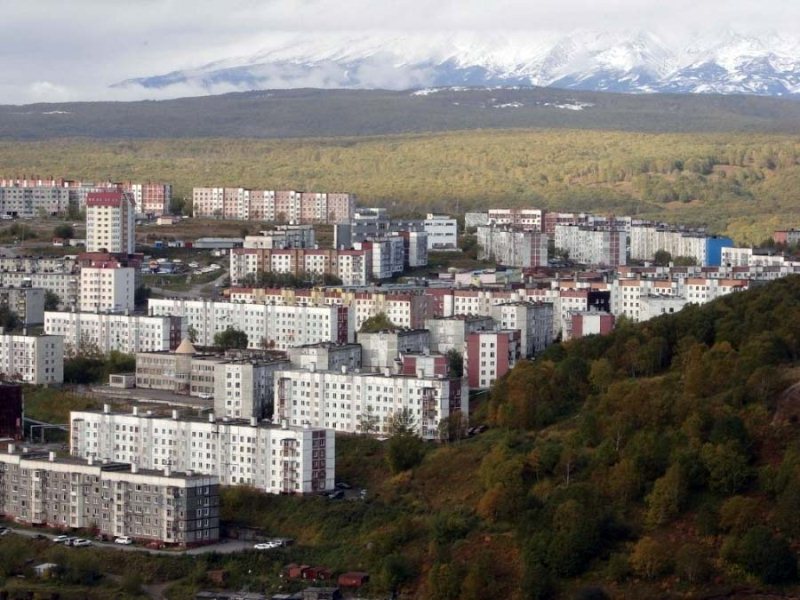 Petropavlovsk-Kamchatsky