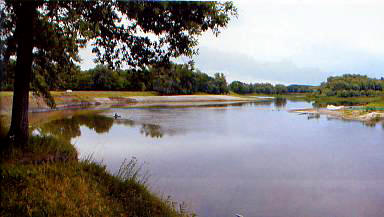
 Even many Russians know nothing about
the area dubbed the "Venice of Volgograd", close to the city of Volgograd,
on the opposite bank of the Volga River. Its location between the Volga's
main riverbed and a branch named Akhtuba accounts for its name — the
Volga-Akhtuba Nature Preserve. Its stunning scenery will impress even a
seasoned traveler. There is a scattering of both large and small
lakes
with
crystal
clear
water,
a variety of
leafy forests along the banks of
numerous small rivers and their tributaries, unique coniferous forests,
and water meadows with rare flowers and grasses. In the absence of
factories and densely populated settlements in the vicinity, the park has
preserved its primordial beauty.
Even many Russians know nothing about
the area dubbed the "Venice of Volgograd", close to the city of Volgograd,
on the opposite bank of the Volga River. Its location between the Volga's
main riverbed and a branch named Akhtuba accounts for its name — the
Volga-Akhtuba Nature Preserve. Its stunning scenery will impress even a
seasoned traveler. There is a scattering of both large and small
lakes
with
crystal
clear
water,
a variety of
leafy forests along the banks of
numerous small rivers and their tributaries, unique coniferous forests,
and water meadows with rare flowers and grasses. In the absence of
factories and densely populated settlements in the vicinity, the park has
preserved its primordial beauty.
The nature preserve extends for over 400 kilometers and is an ideal place for tourism and adventures. Volgograd's tourist agencies offer different kinds of recreation, including a route for tourists who prefer to commune with nature without giving up their creature comforts. The Shelter Tourist Agency provides a comfortable cruiser with every modern convenience. You can take a trip along the rivers and lakes making stops in the most picturesque spots, coming into contact with completely uninhabited corners, and visiting settlements with their unique local color. A comfortable guarded campground for 15 people offers every convenience and the services of a cook.
The nature preserve, with its primordial plant and animal life, abounds in fish, game, berries and mushrooms. Lovers of sports tourism have ample hunting opportunities. In different seasons you can hunt for geese, ducks, rabbits, foxes, or wolves. Licence holders can have the thrill of chasing wild boar.
Fishing, like no other activity, brings you into complete harmony with nature and, if you are lucky, you'll get to try genuine Russian fish soup. Since time immemorial, the Volga area has been famous for such fish as pike, carp, crucian, and catfish.
Lovers of "extreme" recreation can sail down the smaller rivers of the Lower Volga area and go scuba diving. They will always have the advice and help of experienced huntsmen and diving instructors, certified according to the international IDD standard and supplied by the Shelter Agency.