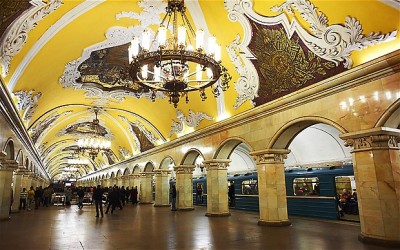
 As a system of public transportation and a work of urban infrastructure, the Moscow Metro is an unparalleled example of architecture and design. The most grandiose architectural phenomenon of the Stalinist era, the vast system maps not only the huge ambitions of the Soviet State under Stalin, but records in amazing detail the ideological and artistic shifts that characterize the period. The historical photographs and contemporary documentation on this website illustrate not only the evolution of a rapid mass transit, but also the remarkable attention paid to aesthetic media - architecture, sculpture, painting and decorative arts - in a monumental public works project. The Moscow Metro provided a stage on which life in the Soviet Union was vividly played out, from the vast forces marshaled for its construction to the shelter it provided for Moscovites during World War II. By the end of the Stalinist era, it had evolved into a strange hybrid of palace, basilica and fortress. The political and ideological course of the Soviet Union during the Stalinist period is reflected in the distinct aesthetic styles of the four principle lines and forty stations constructed under Stalin from 1932 to 1954. The First Line, built in the early 1930's, possesses an invigorating modernism that is a high-water mark of the Soviet avant-garde. With the Second Line, built in the late 1930's, a program of monumental sculpture and art was introduced that signaled Stalin's stranglehold on the ideological goals of the Soviet state. The Third Line, built during the "Great Patriotic War" from 1939 - 1944, became a symbol of Soviet tenacity and ultimately a memorial to the people's resistance during this devastating period. The Fourth Line, completed in 1954 shortly after the death of Stalin, is perhaps the most flamboyantly ideological and represents the epitome of the leader's vision for the Metro. With the demise of Stalin, the expression of the system reverted to its rationalist origins. Although constructed by a tyrant for a people living in terror, this subterranean proletarian paradise offers an ironically humane vision of public social space, both beautiful and functional. Today, with construction continuing, the Moscow Metro covers over 200 kilometers of track and serves 9 million people each day.
www.forevermore.com |