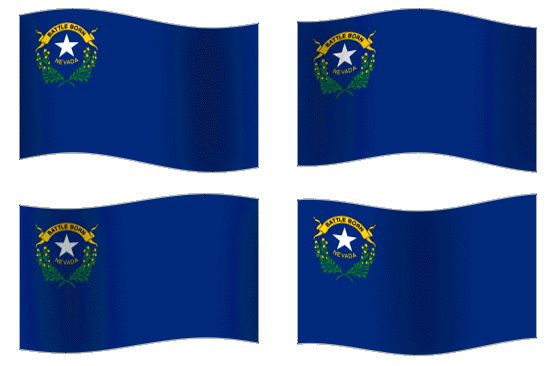
Its motto: All for Our Country.
Its nicknames: Mining State, Sagebrush State, Silver State.
Beauty in the Desolate Wasteland of the Great Basin
Well into the first half of the 19th century, the lonely land just east of Sierra Nevada remained an enigma. While some explorers returned with the stories of snow-covered mountains, pine forests, and rushing trout streams, others described the land as hell's antechamber.
Nevada's mineral wealth became uncontested fact when two miners prospecting outside present-day Reno discovered gold and high-grade silver sulfide. Virginia City became a rich mining town. Gold and silver still contribute to Nevada's economy today. But the state's most valuable asset is its allure for tourists - the neon-lit casinos of Las Vegas, the resorts of Lake Tahoe, and the beauty of the very desert that early explorers deemed a wasteland. Taxes from gambling provide nearly 40 percent of Nevada's general revenues. Las Vegas is not only the nation's gambling capital but its marriage capital as well; the city boasts some 50 wedding chapels.
Despite receiving less than 10 inches of rain a year, Nevada has an amazing diversity of plants and wildlife. Cactus, yucca, sage and other brush plants blossom every spring.
It is Lake Tahoe, however, that is Nevada's most precious gem. Set amid alpine meadows in the Sierra Nevada, the lake is surrounded by snowcapped mountain peaks. In 1861 Samuel Clemens (who would adopt the name Mark Twain a year later) arrived from Missouri to look for gold and discovered that Nevada's real treasure was the beauty and serenity of Lake Tahoe.
The driest of all the 50 states, Nevada relies on a number of man-made lakes and underground sources to augment its meager water supply.
Each year thousands of cowboys and other ranch hands gather in Eiko to perform poems and songs they have written to pass the time on the range.
Nevada joined the Union in 1864 as the 36th state.
(”The USA Diversity of 50 States”)