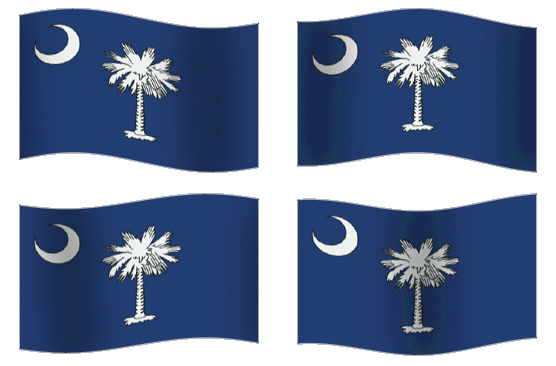
Its mottoes: While I Breathe, I Hope; Prepared in Mind and Resources.
Its nicknames: Iodine State, Keystone of the South Atlantic Seaboard, Palmetto State, Rice State, Swamp State.
Uplands, Lowlands, and a Gracious Sense of the Past
South Carolina is a quiet Atlantic seaboard state tucked between the mountains of North Carolina and the red clay hills of Georgia. Its beauty is subtle rather than spectacular, emanating from grassy savannas and shady pinewoods, lonely marshlands and windswept beaches.
The first English and French colonists who settled near Charles Town in 1670 discovered that the swampy lowlands surrounding them were ideal for rice paddies. Starting with a single bag of Madagascar rice bought from a sea captain in about 1685, the colonists were exporting their own crop by 1690. By 1700 a complex plantation system was established.
Meanwhile, the hilly and forested Piedmont above the lowlands was being settled by arrivals from the northern colonies. Mostly hardworking farmers, they resented the airs and influence of the coast-dwelling aristocrats. Conflicts between up-country and low country arose early and persisted even after the state's capital was moved, as a compromise, to Columbia, midway between the two areas. Regional distinctions began to blur only when the cotton craze swept the entire state in the late 1700's. Vast tracts of forest fell to make way for the new crop.
In the rugged northwestern corner of the state, the Cherokee Foothills Scenic Highway winds close to such impressive sights as craggy Caesar's Head, Table Rock Mountain, and 420-foot Raven Cliff Falls. The hilly Piedmont region forms the industrial core of the state.
In the southeast lies the low country, including the 60-mile sweep of beach known as the Grand Strand; the historic towns of Georgetown and Charleston, the marshy wetlands, and the fabled Sea Islands.
In 1788 South Carolina joined the Union as the 8th state.
(”The USA Diversity of 50 States”)