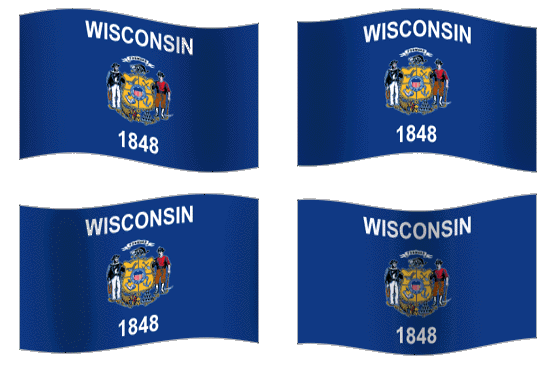
Its motto: Forward.
Its nicknames: America's Dairyland, Badger State1.
Rolling Pastureland and Cool North Woods
From the beginning, this luxuriant, river-scored land possessed a seemingly inexhaustible inventory of natural abundance - fur-bearing animals, towering white pines, and loamy soil for farming. Within a century of white settlement wheat farmers had depleted the fertile soil and most of Wisconsin's virgin white pines had been cut to the ground. William Dempster Hoard used his newspaper, "Hoard's Dairyman," to convince farmers to stop growing wheat and to take up dairying instead. By doing so, they not only rescued the soil but also secured Wisconsin's economic future as the nation's prime producer of milk. butter, and cheese.
The Belle of Wisconsin was the largest cheese ever made — a 40,060-pound Cheddar. It was said that the yellow monster could top more than a million crackers or provide more than 300,000 grilled cheese sandwiches. After touring the country in its Cheesemobile, the Belle was sliced and sold in 1989.
One of the earliest environmental victories in America was the fight to save the 32,000 acre Horicon Marsh. Horicon and the other wetlands in Wisconsin were first seen only as an impediment to agriculture, and many tracts were drained in an effort to extend farmland. But in the 1920's Wisconcin conservationists banded together to restore the marsh to its natural state and sought federal and state protection for the land. Now Horicon is one of the largest marshes in the U.S. It teems with wildlife — otters, herons, migrating Canada geese, and the imperiled redheaded ducks.
Beyond the wetlands, the splendor of Wisconsin is apparent on the shores of the Great Lakes. Door Peninsula is strung with rocky coves and fishing villages reminiscent of the New England coastline. Just off the tip of peninsula is Washington Island. At the far north of the state is a cluster of 22 islands called the Apostles. Standing in Lake Superior like sculpted brown-stone platforms, these islands support dense forests of white pine, birch, spruce and cedar.
Wisconsin joined the Union in 1848 as the 30th state.
(”The USA Diversity of 50 States”)